
Silent and Slow Becomings
On knitting, perseverance, and getting what I want.

“caring is not a desire, neither a norm; it is the learning of an embodied skill, a silent and slow becoming with the fabrics and the threads” Tania Perez-Bustoz, Thinking with Care: Unravelling and Mending in an Ethnography of Craft Embroidery and Technology
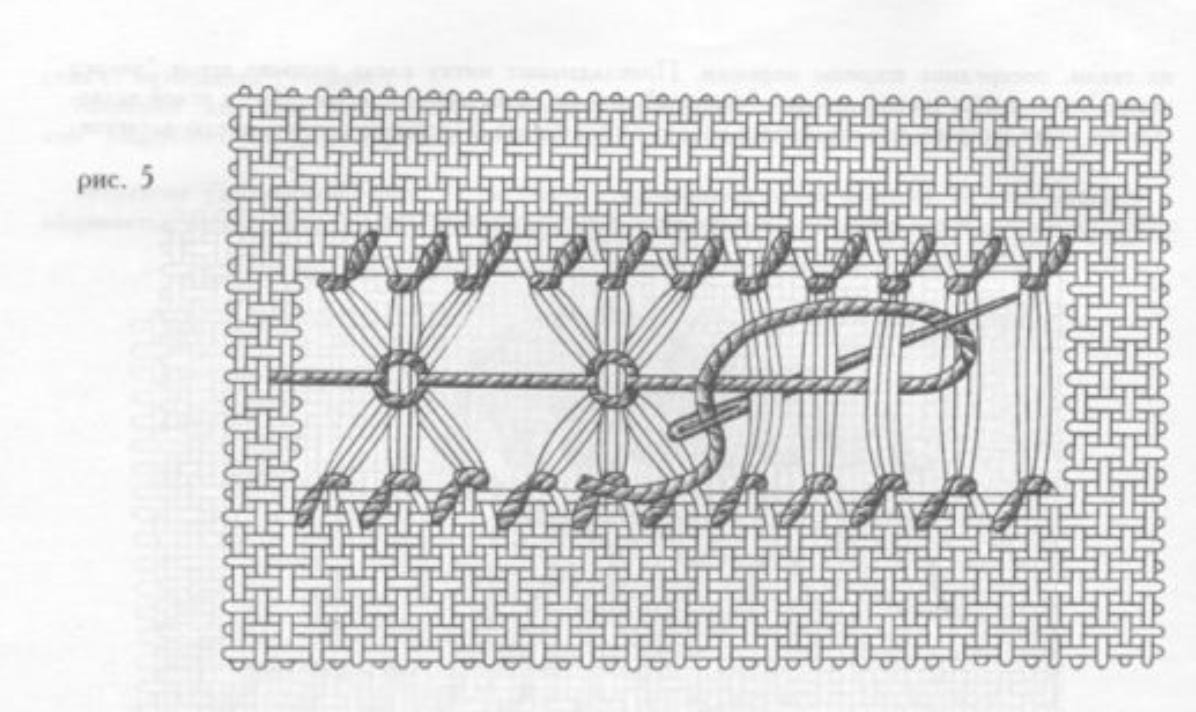
The above is my one of my favourite pieces of writing about craft, a quote I think about and return to often. It’s present in almost everything I write, so if you stick around here I’m sure it will crop up again soon. In Thinking with Care, Perez-Bustos details her time spent learning calado, the traditional Colombian textile art of painstakingly unravelling, then mending linen fabrics as a from of decorative embroidery, though it perhaps shares more similarities with weaving. It looks something like this:
I wont summarise the whole paper here (though I’m tempted to), but I recommend reading it.
What I like so much about this piece of writing is that it puts into words an intangible feeling I have when making, one which I always struggle to describe. That hushed sense of a ‘becoming’; the quiet, slow conversation that happens between the maker and the made. In the moment of creation you exist for a moment outside of yourself. Your being expands - just a breath’s width - to the space at the edge of your body, to encompass the material your hands are touching. It’s a reciprocal process: you are bringing something into being, but that act is bringing you something, too. Knowledge, focus, a point of connection to the exterior world.
Perez-Bustos calls textile practices ‘technologies of knowledge and care’. They are embodied acts which, through all the quiet hours of attention and dedication become ‘emotional endeavours’: they are physical manifestations of care, attention, and love. I’d argue that this can be said of almost any craft process, but it’s true that it’s perhaps most evident in textiles. And so now I’m going to talk about knitting which, for anyone who has had a conversation with me in the last few months, will come as no surprise.
My mum taught me to knit as a child. On one of our annual holidays, sitting together in a tiny caravan that just barely kept out the wild Irish wind, she helped me make my first scarf. Or maybe it was a little doll blanket. I don’t remember, and the article in question is long lost. What is clear in my memory are all the sensory accompaniments of the practice: the smell of the wool (distinctly sheepy), the rough feel of it against my fingers, its jewel-green colour, the swish-click of my needles.
I am by no means a master knitter. Despite being able to knit pretty much all my life, I didn’t really take it up as a practice until late last year. And now, like with almost everything I take a passing interest in, I’ve made it my entire personality.
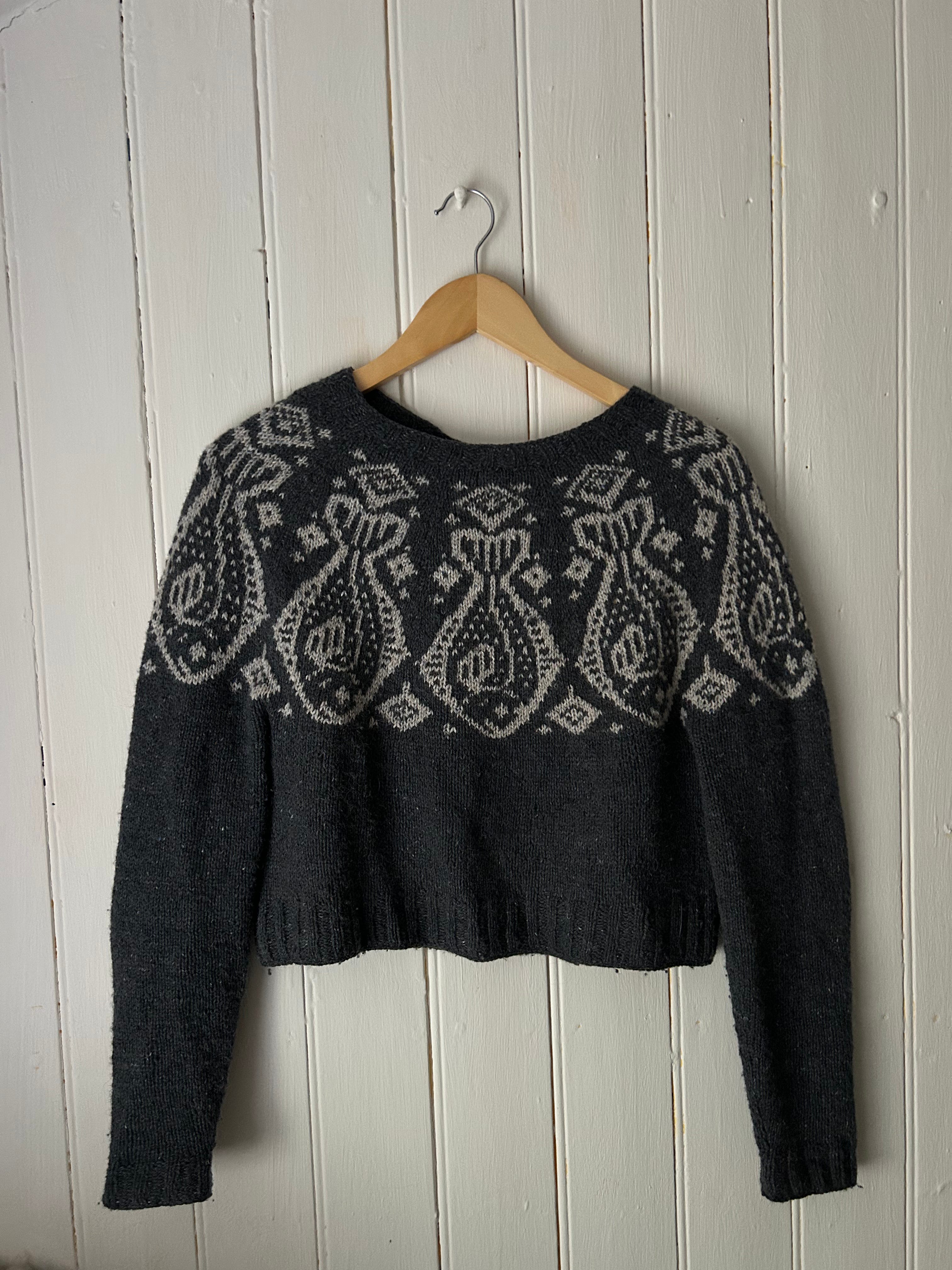
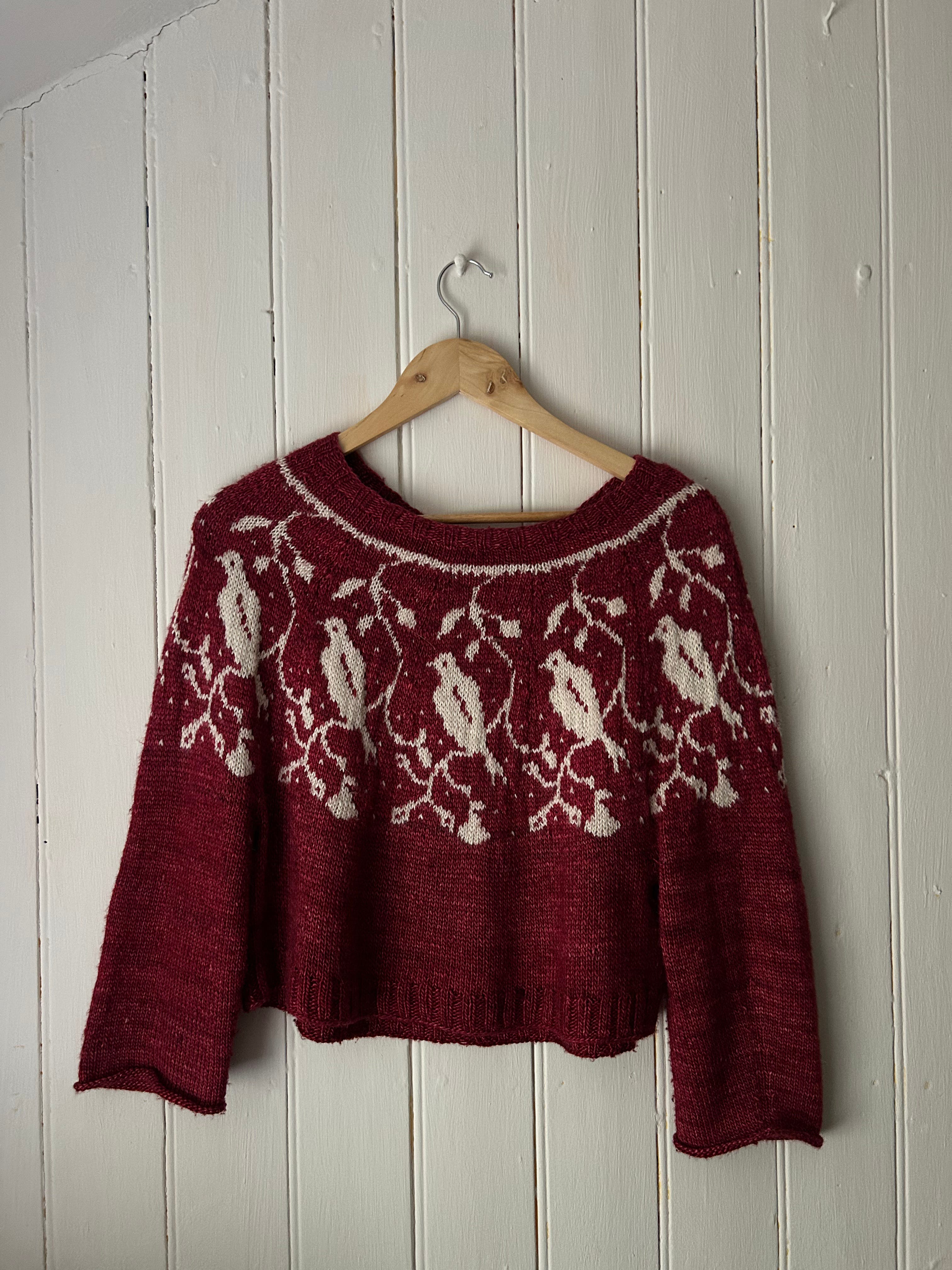
I made my first proper jumper last November: the gorgeous halibut sweater, pattern by boyland knitworks. I’d always been put off before by the mathsy-looking patterns, and the belief that I wouldn’t have the patience to see the project through. What I didn’t realise was how addictive, satisfying, and comforting the process would be.
Again the smell, the feel of the yarn slipping through my fingers. Hours click away at the point of the needles: stitch by stitch, row by row, the pattern reveals itself, and at some imprecise moment the material before you has become an object. It expands, the weight of it increasing in your lap.
This isn’t alway a comfortable or enjoyable process, at least not for me. Depending on my state of mind the sea of stocking stitch can be in turns a peaceful, meditative endeavour, and a frustratingly boring chore. A fundamentally impatient creature, I’ve cast off a bunch of projects a good few inches too soon because I just can’t wait to be finished and to see the outcome. Despite that I’m now properly addicted, and I feel genuinely bereft if I don’t have something to be stitching away at every spare moment.
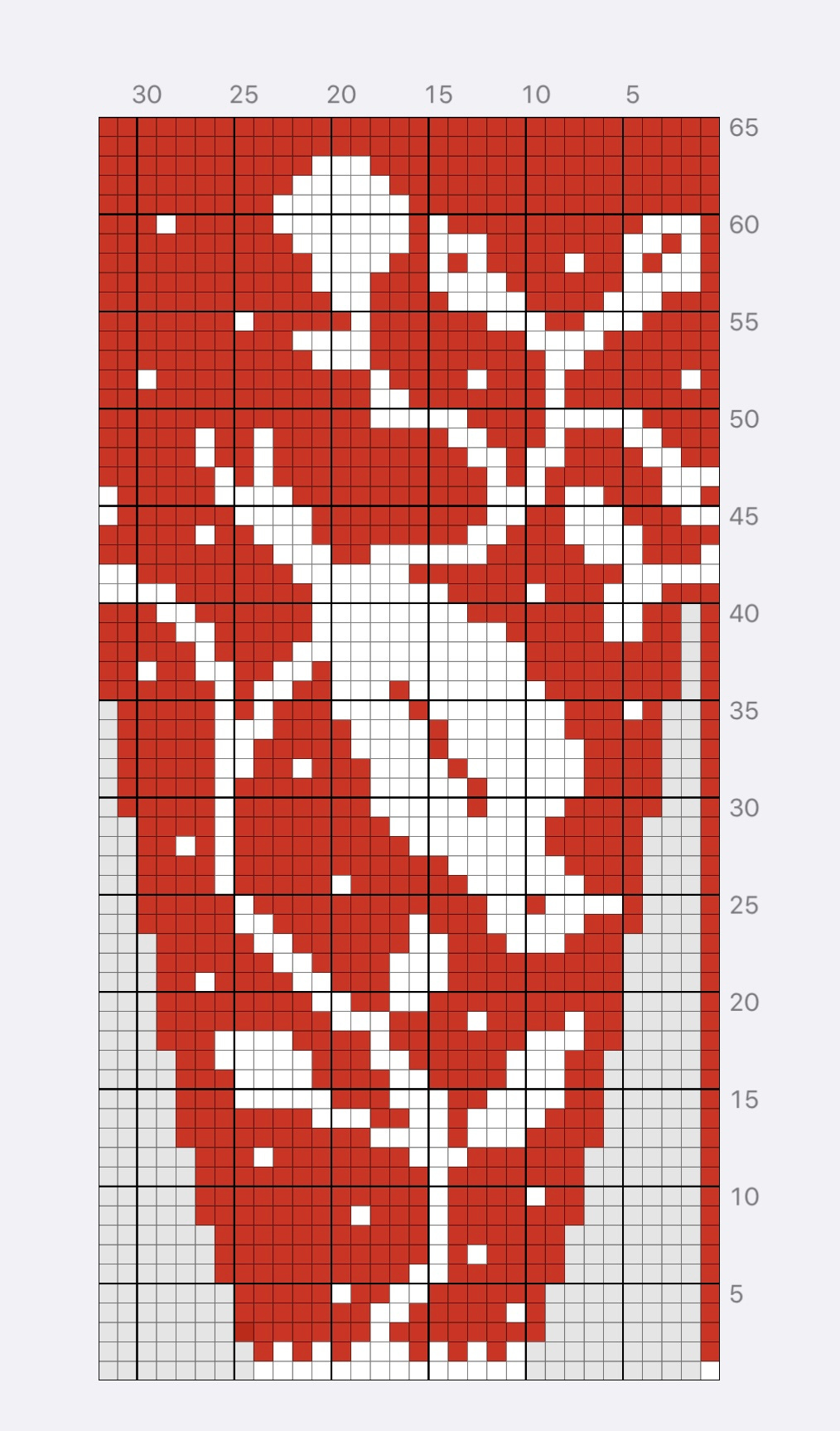
I’ve progressed from following other people’s patterns to experimenting with designing my own, and that’s even better. Being able to dream something up and then actually bring it into being feels like magic.
Something I really don’t like about myself is that I’m constantly having to keep in check a sense that I’ve been hard done by by the world. This is not true: my life is, mostly, very nice. But maybe its the lot of all gifted-children-turned-mediocre-adults to feel like we’re owed something we never got. Post-lockdown, post-graduation, post-early twenties life isn’t quite what I was expecting it to be. Sometimes I can’t quite believe I don’t get to have exactly what I want.
I think knitting helps somewhat in mitigating this. The act of making a jumper feels like giving myself a gift, both in the physical and more esoteric sense. I absolutely love getting new clothes (a treat I feel less and less able to afford myself, both ethically and financially) and being able to give myself an article that fits my size and taste exactly is amazing. If I want a silly little easter jumper to match my baby niece’s, I can make that happen.
But more abstractly, knitting feels like engaging in an act of care. The silent and slow becoming gives me a space in which to practice dreaming, hope, and perseverance. It teaches me emotional resilience, that I can overcome obstacles, that small mistakes don’t matter enormously when looked at as a whole.
It reminds me that I can actually have exactly what I want, I just have to make it happen for myself.
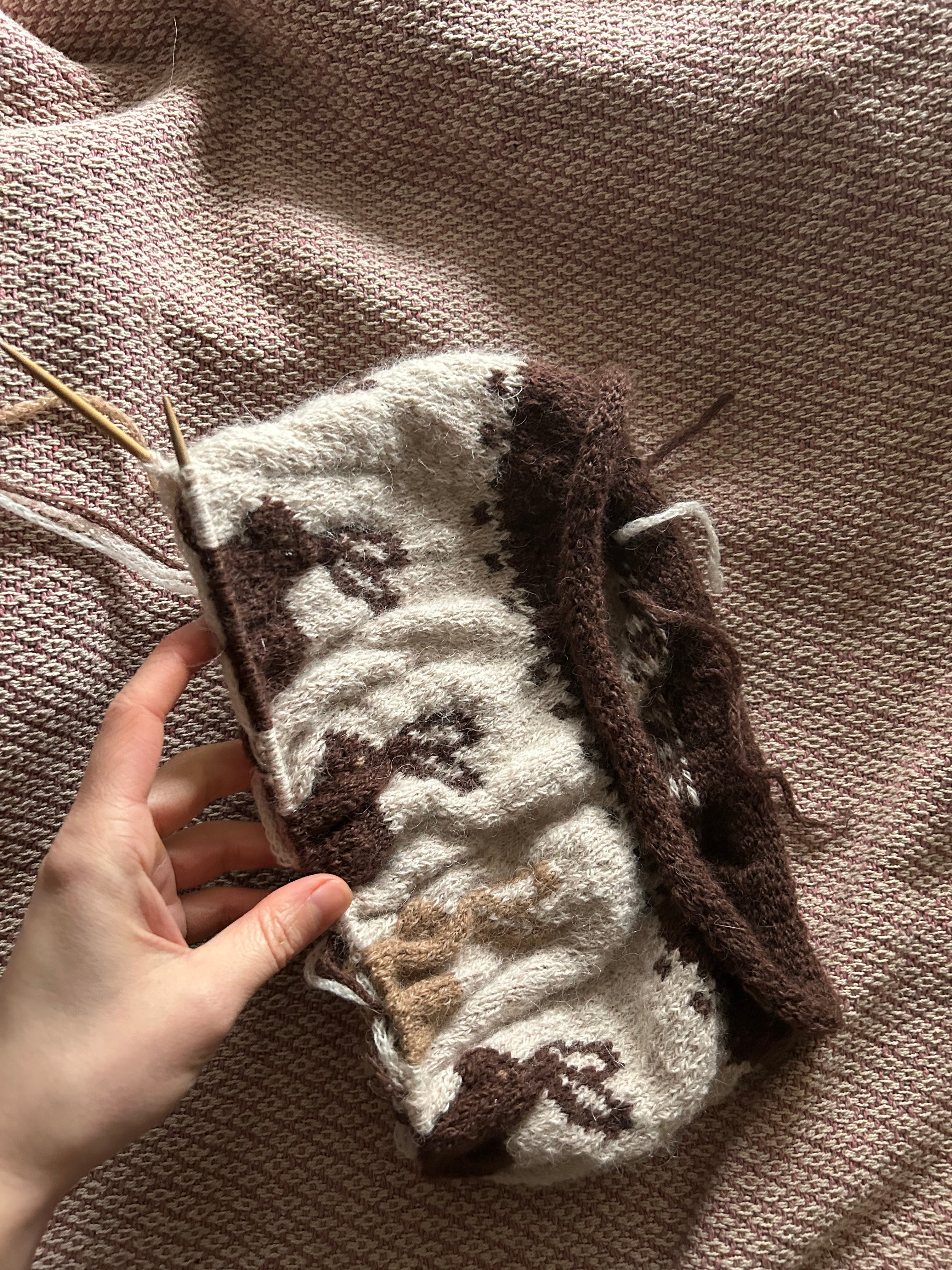
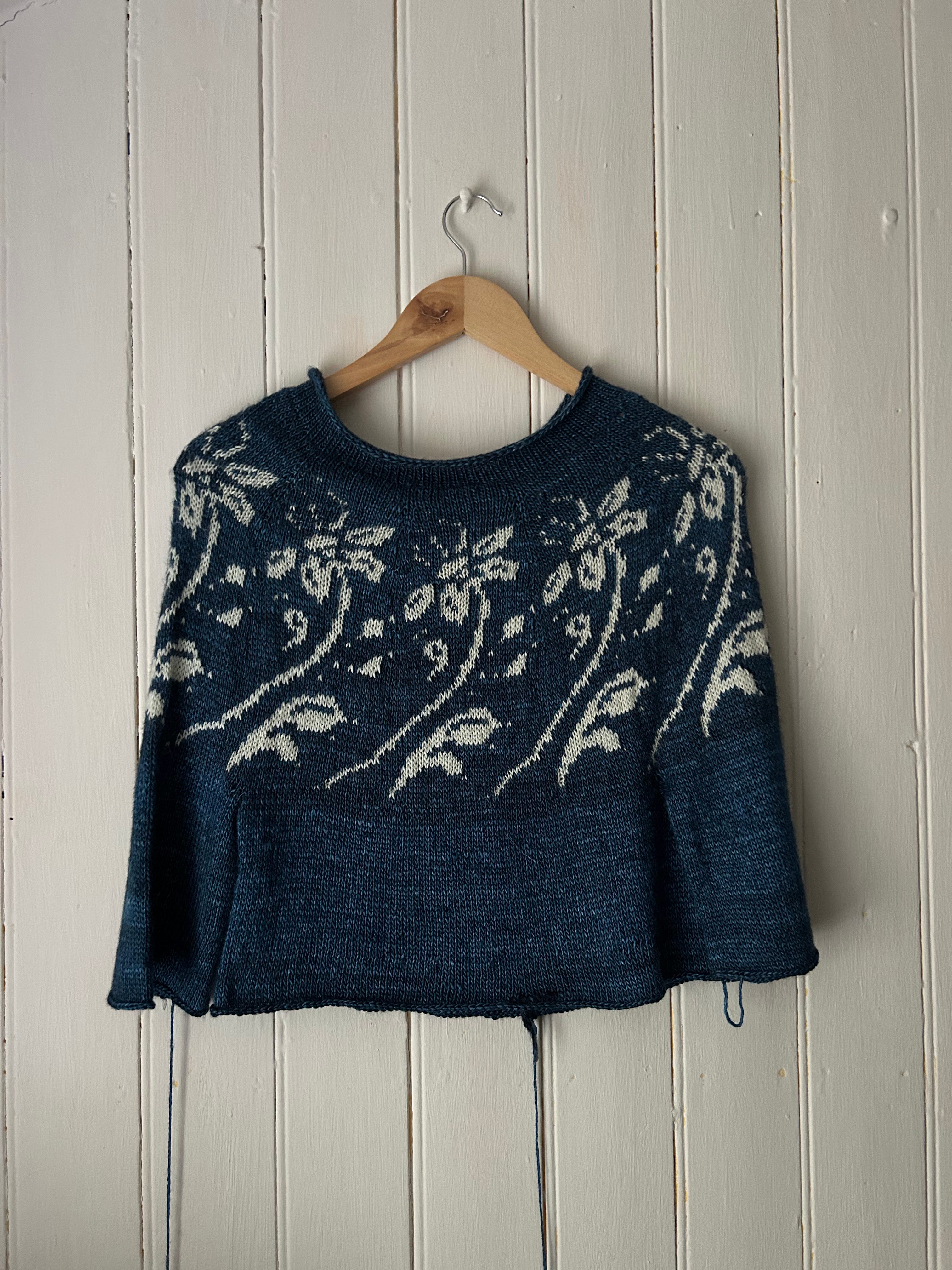
Has this whole post just been an excuse to show off the jumpers I’ve made? Very probably.